Why Rodent Proofing Your Attic is Essential — And How Attic Professional Can Help
Quick Answer
Rodent proofing your attic is essential because rats and mice can enter through small gaps, contaminate insulation, leave droppings and urine, create odors, damage attic materials, and return if entry points are not sealed. For San Diego County homes, rodent proofing is especially important before new attic insulation is installed because contaminated or rodent-damaged insulation should not be covered up.
The best attic rodent solution usually includes inspection, contaminated insulation removal if needed, attic cleaning, sanitation, sealing rodent entry points, and then new attic insulation installation.
Why Rodent Proofing Matters for San Diego Homes
Rodents are a common attic problem throughout San Diego County. Homes in San Diego, Chula Vista, La Mesa, El Cajon, Santee, Lakeside, Poway, Escondido, Spring Valley, Lemon Grove, Encinitas, Carlsbad, and nearby communities can all experience rodent activity in the attic.
Rats and mice often enter attics through small openings around rooflines, vents, utility penetrations, construction gaps, damaged screens, fascia areas, and exterior access points. Once inside, they can use insulation as nesting material, travel through it, contaminate it, and create ongoing odor or cleanliness problems.
The most important thing to understand is this: removing rodents does not always solve the attic problem. If the entry points are still open, rodents can return and contaminate the attic again.
That is why attic rodent proofing is a critical step for protecting your home and your insulation.
How Do Rodents Get Into Attics?
Rodents can enter attics through surprisingly small openings. They often follow rooflines, climb walls, access trees near the home, or enter through exterior gaps that are difficult for homeowners to see from the ground.
Common attic rodent entry points include:
- Gaps around the roofline
- Damaged or open vents
- Gaps near eaves or fascia boards
- Openings around utility lines
- Plumbing or electrical penetrations
- Construction gaps
- Damaged exterior screens
- Holes near the attic access areas
- Openings around duct or exhaust penetrations
- Gaps caused by aging exterior materials
Because rodents can squeeze through small spaces, a proper inspection is important. Even one missed entry point can allow rodents to come back.
What Are the Signs of Rodents in the Attic?
Many homeowners do not realize they have rodents in the attic until the problem becomes obvious. Since the attic is rarely visited, rodent activity can continue for weeks or months before it is discovered.
Common signs of rodents in the attic include:
- Scratching, scurrying, or movement sounds in the ceiling
- Rodent droppings on or around insulation
- Urine odor or strong attic smells
- Nesting materials
- Chewed insulation
- Tunnels through insulation
- Grease marks near entry points
- Damaged ductwork or attic materials
- Dead rodent odor
- Dirty or contaminated insulation
- Recurring pest problems after past treatment
If you notice these warning signs, it is important to inspect the attic before installing new insulation or covering the existing material.
Can Rodents Damage Attic Insulation?
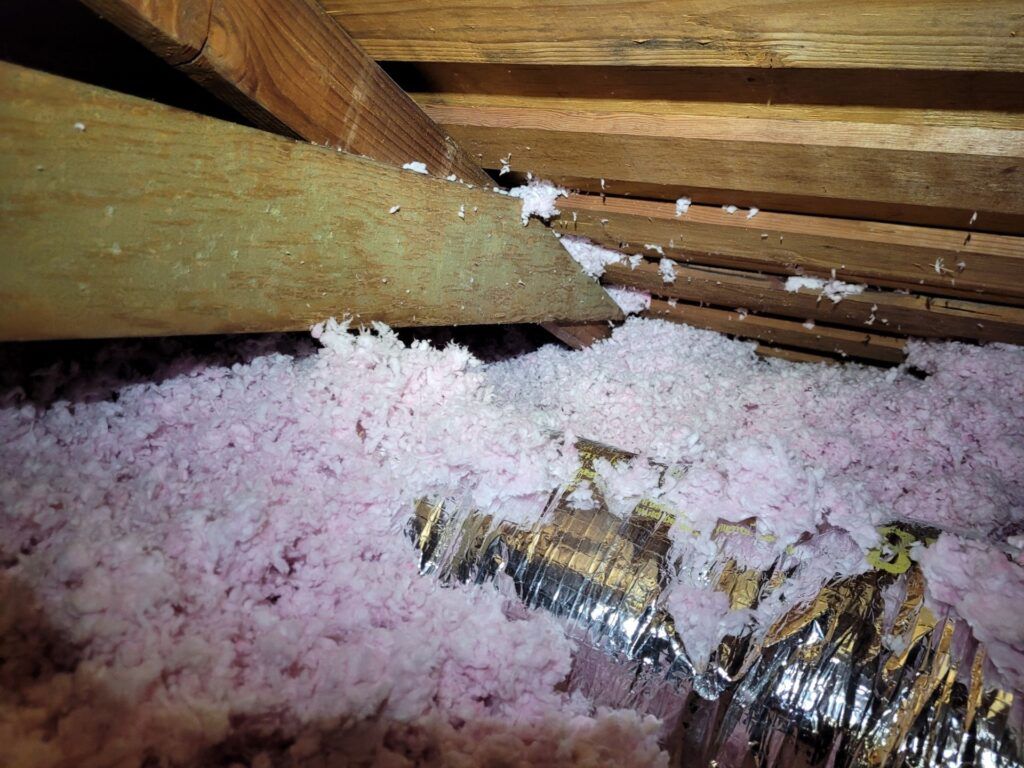
Yes. Rodents can damage attic insulation by tunneling through it, nesting in it, compressing it, moving it out of place, and contaminating it with droppings and urine.
Attic insulation is designed to help slow heat transfer between the attic and living space. When rodents disturb or contaminate the insulation, the attic can become dirtier, smell worse, and perform less effectively.
Rodent-damaged insulation may appear:
- Flattened
- Uneven
- Torn apart
- Discolored
- Filled with droppings
- Mixed with nesting materials
- Strong-smelling
- Disturbed in pathways or trails
If insulation has been contaminated by rodents, simply adding new insulation over the old material is usually not the best solution.
Should Rodent-Contaminated Insulation Be Removed?
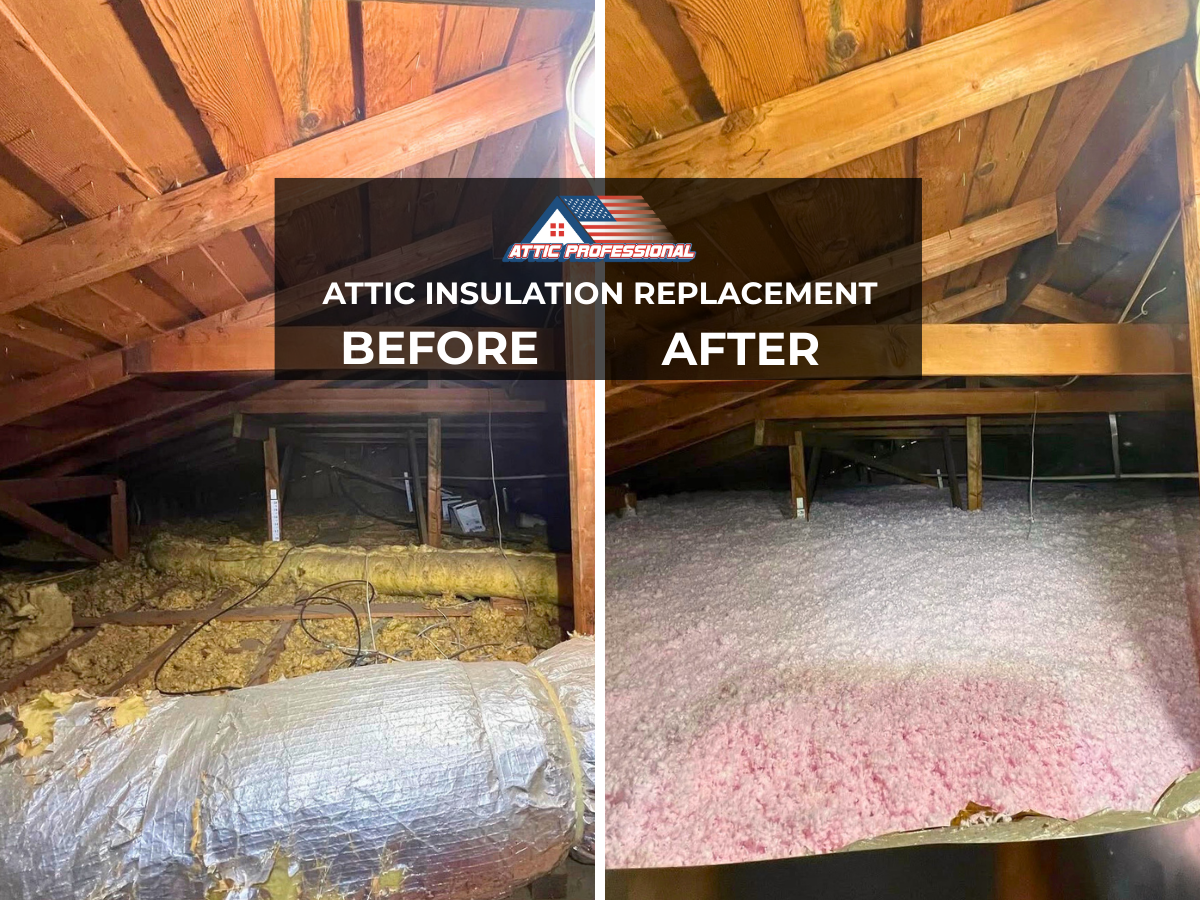
In many cases, yes. If attic insulation contains rodent droppings, urine, nesting materials, strong odors, dead pests, or widespread contamination, insulation removal may be recommended before cleaning, sanitation, rodent proofing, and new insulation installation.
Covering contaminated insulation with new insulation can trap droppings, odors, and debris underneath. It can also make future attic inspections harder because the contamination is hidden below the new material.
A better approach is to evaluate the attic first and determine whether the affected insulation should be removed. Once contaminated material is removed, the attic can be cleaned, sanitized, rodent proofed, and prepared for new insulation.
Is Pest Control the Same as Rodent Proofing?
No. Pest control and rodent proofing are related, but they are not the same service.
Pest control typically focuses on addressing active rodents through trapping, baiting, or removal methods. Rodent proofing focuses on sealing the entry points that allow rodents to get into the attic in the first place.
For many homeowners, pest control may address the immediate rodent issue, but the attic can still remain vulnerable if entry points are not sealed. If the attic already has contaminated insulation, then insulation removal, attic cleaning, sanitation, and new insulation installation may also be needed.
The best long-term approach is usually to address both the active rodent issue and the attic access points.
Why Do Rodents Keep Coming Back to the Attic?
Rodents usually keep coming back because one or more entry points are still open. If a home has roofline gaps, damaged vents, open penetrations, or construction openings, rodents may continue to find their way inside.
This is why homeowners sometimes deal with recurring attic rodent problems even after pest control treatment. The active rodents may be removed, but the attic is still accessible.
Rodent proofing helps reduce the chance of future entry by identifying and sealing visible access points. This is especially important before replacing attic insulation because new insulation can quickly become contaminated again if rodents return.
Should Rodent Proofing Be Done Before New Attic Insulation?
Yes. If there are signs of rodent activity, rodent proofing should be completed before new attic insulation is installed.
Installing new insulation without sealing rodent entry points can lead to the same problem happening again. Rodents may return, tunnel through the new insulation, leave droppings and urine, and contaminate the attic all over again.
The correct order is usually:
- Inspect the attic
- Identify signs of rodent activity
- Locate visible entry points
- Remove contaminated insulation if needed
- Clean debris and nesting materials
- Sanitize affected areas if needed
- Seal rodent entry points
- Install new attic insulation
This process helps protect the new insulation and gives the homeowner a cleaner, better-prepared attic.
What Is the Correct Order for Attic Rodent Cleanup?
The correct order matters because each step protects the next one. If you install insulation before rodent proofing, rodents may come back. If you rodent proof but leave contaminated insulation in place, odors and contamination may remain.
A complete attic rodent cleanup process may include:
- Attic inspection
- Photo documentation
- Identifying rodent droppings, nesting materials, and damage
- Locating visible rodent entry points
- Contaminated insulation removal, if needed
- Debris cleanup
- Attic sanitation, if needed
- Rodent proofing
- Air sealing, if recommended
- New attic insulation installation
- Final cleanup and completion photos
Not every attic needs every step, but the process should be based on the actual condition of the attic.
What Should Homeowners Avoid When Dealing With Attic Rodents?
Homeowners should avoid treating attic rodents as only a pest issue without considering the condition of the insulation and attic space.
Common mistakes include:
- Installing new insulation over rodent droppings
- Ignoring rodent entry points
- Assuming pest control alone solves the attic issue
- Leaving contaminated insulation in place
- Ignoring attic odors
- Skipping attic inspection before reinsulating
- Failing to check vents, rooflines, and utility gaps
- Waiting until rodents damage more insulation
- Choosing the cheapest option without understanding the process
A better approach is to inspect the attic, identify the source of the issue, remove contaminated materials if needed, seal entry points, and protect the attic before new insulation is installed.
How Can Rodent Proofing Protect New Attic Insulation?
New attic insulation is an investment in your home’s comfort and performance. Rodent proofing helps protect that investment by reducing the chance of rodents re-entering and contaminating the new material.
If your attic has had rodent activity in the past, rodent proofing should be treated as part of the insulation upgrade process, not an optional add-on.
A cleaner and better-protected attic may include:
- Removing rodent-contaminated insulation
- Cleaning debris from the attic
- Sanitizing affected areas
- Sealing visible rodent entry points
- Installing new insulation
- Providing photo documentation
This process helps homeowners see what was found, what was corrected, and what the attic looks like after the work is complete.
How Attic Professional Can Help
Attic Professional helps San Diego County homeowners restore and protect their attics with attic rodent proofing, attic insulation removal, attic cleaning, sanitation, attic air sealing, and new attic insulation installation.
Our team can inspect the attic, document visible conditions, identify signs of rodent activity, look for possible entry points, and recommend the right next step based on the condition of your attic.
Depending on what we find, your attic may need:
- Rodent proofing
- Contaminated insulation removal
- Attic cleaning
- Attic sanitation
- Attic air sealing
- New attic insulation installation
- Air duct inspection or repair
- Photo documentation
Some homes may only need rodent proofing. Others may need contaminated insulation removed before the attic can be cleaned, sealed, and reinsulated.
Rodent Proofing for Homes Throughout San Diego County
Rodent activity can happen in many parts of San Diego County. Older homes, homes near canyons, homes with roofline gaps, homes near vegetation, and homes with previous pest activity may be more likely to need attic rodent inspection.
Attic Professional serves homeowners throughout San Diego County, including San Diego, Chula Vista, La Mesa, El Cajon, Santee, Lakeside, Poway, Escondido, Encinitas, Carlsbad, Lemon Grove, Spring Valley, National City, Mira Mesa, Rancho Bernardo, Scripps Ranch, Clairemont, Pacific Beach, La Jolla, Carmel Valley, and nearby communities.
Frequently Asked Questions About Attic Rodent Proofing
What is attic rodent proofing?
Attic rodent proofing is the process of identifying and sealing visible entry points that allow rodents to access the attic. These entry points may include roofline gaps, vents, utility penetrations, damaged exterior areas, construction gaps, and small openings around the home.
How do I know if rodents are in my attic?
Common signs include scratching sounds, droppings, urine odor, nesting materials, chewed insulation, tunnels through insulation, grease marks near entry points, and recurring pest problems. A professional attic inspection can help identify visible signs of rodent activity.
Should rodent-contaminated insulation be removed?
In many cases, yes. If insulation contains rodent droppings, urine, nesting materials, odors, or widespread contamination, removal may be recommended before the attic is cleaned, sanitized, rodent proofed, and reinsulated.
Can I install new insulation over rodent droppings?
Installing new insulation over rodent droppings is usually not recommended. Covering contaminated insulation can trap droppings, urine, odors, and nesting materials underneath the new material. The attic should be inspected first to determine whether insulation removal is needed.
Is rodent proofing different from pest control?
Yes. Pest control usually focuses on addressing active rodents. Rodent proofing focuses on sealing entry points that allow rodents to get into the attic. Many homes need both active rodent control and entry-point sealing for better long-term protection.
Why do rodents keep coming back after pest control?
Rodents often return because entry points are still open. If roofline gaps, vents, utility openings, or construction gaps are not sealed, rodents may continue to access the attic even after treatment.
Should rodent proofing be done before new attic insulation?
Yes. If there are signs of rodent activity, rodent proofing should be done before new attic insulation is installed. This helps protect the new insulation from future contamination.
Does Attic Professional provide rodent proofing near me?
Attic Professional provides attic rodent proofing, insulation removal, attic cleaning, sanitation, and new attic insulation installation throughout San Diego County, including San Diego, Chula Vista, La Mesa, El Cajon, Santee, Poway, Escondido, Encinitas, Carlsbad, Spring Valley, Lemon Grove, and surrounding areas.
Schedule a Free Attic Rodent Inspection in San Diego County
If you hear scratching in the ceiling, see rodent droppings, smell attic odors, or suspect rodents are entering your attic, Attic Professional can help.
We provide attic rodent proofing, contaminated insulation removal, attic cleaning, sanitation, air sealing, and new attic insulation installation throughout San Diego County.
Schedule a free attic inspection today and find out what your attic needs before rodents cause more damage or contaminate new insulation.